
Which AI Agent Type Is Right for Your Business?
A guide from your IT consulting team – so you invest in the right solution

Your leadership team is asking what your AI strategy looks like. Here’s the question most organizations skip: which type of AI agent actually fits your problem? And what does each option cost us in risk and operating overhead?
At RadixBay, we view AI & Machine Learning as more than a technical capability – it’s a strategic advantage that allows organizations to rethink how work gets done, how decisions are made, and how value is delivered. This guide breaks down the different types of AI agents in simple terms, helping you understand which approach delivers the most value for your organization.
What Are AI Agents?
Think of AI agents as intelligent assistants that can complete tasks with varying levels of independence. Some follow strict instructions you provide, while others can think and adapt on their own to achieve goals.
Two main categories exist for AI:

- AI Workflows are like detailed instruction manuals. The AI follows a specific path you’ve defined, step by step. They’re predictable and reliable.
- Autonomous Agents are like trusted team members. You give them a goal, and they determine the best way to achieve it. They’re flexible and adaptive.
Not every business challenge requires the most sophisticated solution. Here’s how to decide:
- Choose AI workflow-based agents when:
- Your process is clear and repeatable
- You want consistent, predictable results every time
- The task follows the same steps regardless of input
- Choose autonomous agents when:
- Every situation requires different handling
- You need flexible problem-solving capabilities
- The exact steps cannot be predicted in advance
Before you build anything: when NOT to use AI agents
If a simple automation or existing tool already solves the problem, stop here.
AI agents add cost, complexity, and maintenance overhead. The test: if you can write every step the process takes, you probably need a workflow tool, not an agent.
Don’t use an agent:
- When the process is deterministic and already handled by RPA/workflow tools.
- When data access and governance are not ready (no clean sources, unclear permissions).
Choosing the Right Agent Type for Your Business
Let’s take a closer look at six agent types – from simplest to most complex.
| Agent type | Complexity | Cost | Best trigger | Risk level |
|---|---|---|---|---|
| Step-by-step | Low | $ | Repeatable, structured process | Low |
| Smart routing | Low | $ | High incoming request volume | Low |
| Parallel processing | Medium | $$ | Large volume, time-sensitive tasks | Low |
| Manager-team | High | $$$ | Multi-part complex projects | Medium |
| Quality control | High | $$$ | Quality-critical output | Medium |
| Fully autonomous | Very high | $$$$ | Open-ended goals | High |
Type 1: Step-by-Step Agents
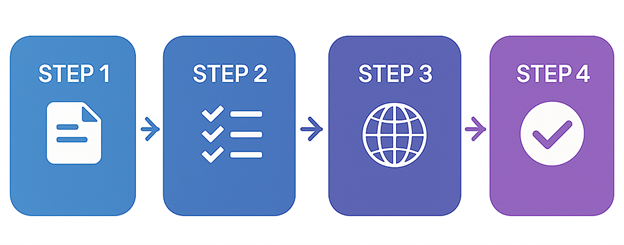
Step-by-step agents break large tasks into smaller, manageable steps. Each step completes before moving to the next, with quality checks between stages. Think of it like an assembly line where each station completes one specific task before passing work to the next station.
Best for:
- Creating content that requires translation into multiple languages
- Writing reports following structured formats
- Processing applications through multiple review stages
Real business example: Your marketing team creates a campaign message. The agent checks it against brand guidelines, then automatically translates it into five languages. Each translation gets verified before moving forward.
Why it works: Each step focuses on doing one thing well. Automatic quality checks prevent errors from spreading through your process.
Type 2: Smart Routing Agents
Smart routing agents read incoming requests and automatically direct them to the right department, specialist, or process. Think of it like a skilled receptionist who knows exactly which expert to connect each caller to based on their specific needs.

Best for:
- Customer service inquiry management
- Support ticket distribution
- Directing tasks to appropriate team members automatically
Real business example: Customer emails arrive throughout the day. The agent automatically routes refund requests to billing, technical issues to IT support, and general questions to customer service – all instantly, 24/7.
Why it works: Customers receive faster responses from the right people, and your teams focus on their expertise instead of sorting through irrelevant requests.
This approach proves particularly valuable for customer-facing applications where response speed directly impacts satisfaction.
Type 3: Parallel Processing Agents
Parallel processing agents work on multiple tasks simultaneously instead of completing them one after another. Think of it like having five team members working on different parts of a project at once, rather than one person doing everything sequentially.
Two approaches to parallel processing:
- Division approach: Splits large projects into smaller pieces and tackles them all simultaneously.
- Consensus approach: Multiple agents review the same item independently, then compare their findings for accuracy.
Best for:
- Analyzing large volumes of documents quickly
- Getting multiple perspectives on important decisions
- Processing data where tasks don’t depend on sequential completion
Real business example: You need to review 50 supplier contracts before a board meeting tomorrow. Instead of checking them one by one over days, the agent reviews all 50 simultaneously and flags potential issues across all contracts in minutes.
Why it works: Tasks that would take hours or days complete in minutes without sacrificing quality or thoroughness.
Type 4: Manager-Team Agents (Orchestrator-Workers)
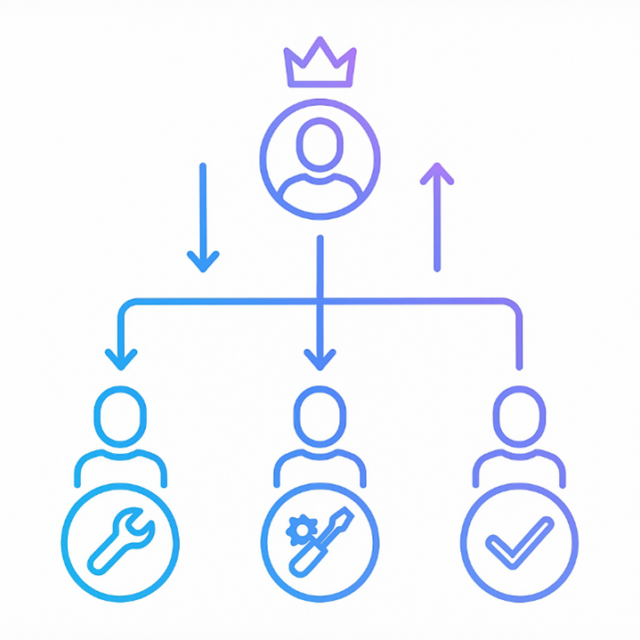
Manager-team agents use one “manager” agent that breaks down complex projects and assigns pieces to specialized “worker” agents, then coordinates and synthesizes their work. Think of it like a skilled project manager who delegates tasks to specialists based on their strengths and brings everything together toward a common goal.
Best for:
- Complex projects with many interdependent parts
- Research requiring information from multiple sources
- Development projects affecting multiple business systems
Real business example: You request a competitive analysis for an upcoming strategy meeting. The manager agent assigns one worker to gather pricing data, another to analyze market trends, and another to review customer feedback. It then synthesizes everything into one comprehensive report with actionable insights.
Why it works: Complex projects complete faster with better results because specialized agents handle what they do best, coordinated by intelligent oversight.
This type excels in web development projects where multiple technical components need seamless coordination.
Type 5: Quality Control Agents (Evaluator-Optimizer)
Quality control agents have one agent create initial work, while another agent reviews and suggests improvements. The process repeats until output meets your quality standards. Think of it like a writer-editor partnership where drafts progressively improve through multiple rounds of constructive feedback.

Best for:
- Content requiring polish and professionalism
- Translations needing cultural nuance and accuracy
- Any output where “good enough” simply isn’t acceptable
Real business example: The agent drafts a proposal for a major client opportunity. A second agent reviews it for clarity, persuasiveness, tone, and alignment with your brand voice. It suggests specific improvements. The process repeats until the proposal meets your established standards before you even see it.
Why it works: You consistently receive high-quality outputs that sound professional and on-brand, without the time-consuming back-and-forth of multiple human review cycles.
This is perfect for content creation workflows where quality directly impacts brand perception.
Type 6: Fully Autonomous Agents
Fully autonomous agents work independently from start to finish, making decisions about how to accomplish goals. They check in only when they need your input or encounter obstacles. Think of it like a senior consultant you hire for a project – you explain what you need, they determine how to do it, and they keep you updated on progress without constant supervision.

The autonomous agent lifecycle:
- Initiation: You explain the goal and success criteria
- Planning: Agent plans its approach independently
- Execution: Agent executes, learning from environmental feedback
- Checkpoint: Agent requests help only when genuinely needed
- Termination: Agent completes the task or reports why it cannot
Best for:
- Open-ended problems without predetermined solutions
- Tasks requiring adaptation to changing circumstances
- Situations where you trust the agent to make sound decisions
Real business example: You tell the agent, “Find three potential office locations in Austin meeting our space, budget, and accessibility requirements.” It researches neighborhoods, compares properties, analyzes commute patterns, evaluates local amenities, and presents three vetted options with supporting analysis and recommendations.
Important considerations
Autonomous agents carry higher cost than simpler approaches due to their complexity.
They require extensive testing before full deployment and robust safeguards to prevent compounding errors. They work best when you have clearly defined success criteria in place before you begin.
Turning AI Into Real Business Value
AI agents offer powerful capabilities for transforming how your business operates. Each type, from simple step-by-step agents to fully autonomous systems, solves different business challenges. The most successful implementations start simple, measure results carefully, and add complexity only when benefits clearly justify it. Success belongs to teams that know how to design, guide, and validate AI to achieve strategic goals.
If you’re exploring AI agents, or you’re not sure which approach fits, our RadixBay team is happy to talk through your goals, constraints, and opportunities. Our team brings deep knowledge across AI strategy, machine learning, and practical agent implementations, with a focus on delivering measurable business outcomes. If you are evaluating an AI initiative, contact us to schedule a brief, consultative conversation where we can align on your business outcomes, assess readiness, and map a practical first use case. What outcome would make an AI initiative a clear win for your organization in the next 90 days?

Oussama Bensaid
- RadixBay Consultant
- HaloITSM Certified Administrator
- Salesforce Certified MuleSoft Integration Foundations
- Certified Entry-Level Python Programmer
- AWS Cloud Practitioner Certified
- Associate Certified Graph Developer
