
What Sudoku Can Teach Us About Better Leadership and Smarter Business Decisions

In business, success often depends on the ability to solve complex problems with limited information. Interestingly, that’s exactly what Sudoku teaches you to do — one square at a time.
At first glance, Sudoku looks like a simple logic puzzle. But behind every 9×9 grid lies a masterclass in strategic thinking, pattern recognition, and disciplined decision-making — the same skills that drive effective leadership, project management, and innovation. In IT and digital transformation work, those skills show up when teams must make architectural, configuration, and process decisions before all requirements are fully known, relying on constraints, logic, and iterative refinement to move forward.
Understanding the Problem Space
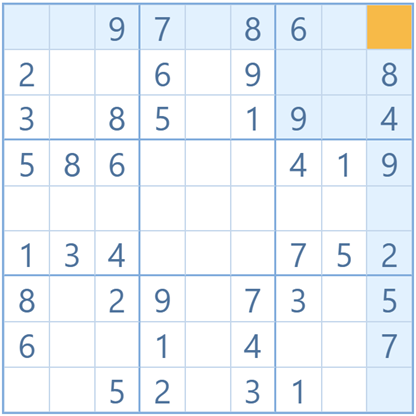 At the start, the board is mostly empty. There’s structure, rules, and constraints — but no obvious move.
This feels very similar to the start of most projects I work on. Requirements are often unclear, the scope is still forming, and even knowing where to begin can feel daunting. On my current project, progress wasn’t possible until we fully understood why we were doing the work and what problem we were actually solving.
Just like Sudoku, the first step wasn’t action — it was orientation. I focused on gathering requirements, taking detailed notes, and documenting current-state process flows before building future-state ones.
In consulting, this shows up as resisting the pressure to immediately produce solutions and instead investing time in understanding context, stakeholders, and constraints before committing to an approach.
Exploring Possibilities Without Commitment
 Sudoku success depends on identifying hidden relationships between numbers. You learn to spot gaps, trends, and subtle connections that aren’t immediately obvious.
That same skill applies directly to business analytics, operations, and leadership. The professionals who excel at identifying meaningful patterns in data, behavior, or performance metrics are the ones who find opportunities others overlook.
At this stage, candidate numbers appear. Nothing is locked in — just logical possibilities.
This mirrors how I work through uncertainty. I regularly document assumptions so I can move forward while being explicit about what is known and what isn’t. I’ve also seen what happens when commitment comes too early. On my current project, test scripts were finalized before future-state assumptions were fully understood, leading to significant rework — but also valuable learning.
In consulting, this shows up as drafting assumptions, outlining scenarios, and treating early work as provisional rather than final, knowing that clarity improves over time.
Narrowing Scope Strategically
 Each puzzle demands deep concentration and sustained mental effort. In an age of constant distraction, Sudoku is a rare exercise in single-tasking — teaching you to hold multiple variables in mind and maintain clarity under pressure.
That discipline translates powerfully to business environments where focus and follow-through determine outcomes — from running a project sprint to steering a negotiation.
Here, focus narrows to a single column or section — the area with the most constraint.
In my role, prioritization often comes down to deadlines and urgency. I track assignments, due dates, and points of contact to ensure I’m always applying effort where it matters most at that moment.
Sudoku reinforces that progress doesn’t come from doing everything — it comes from doing the right thing first.
In consulting, this shows up as identifying the most time-sensitive or high-impact workstream and deliberately focusing attention there instead of spreading effort too thin.
Building a Reliable Mental Model
 Sudoku punishes impatience. You can’t guess your way to a solution — you must test assumptions, reassess, and refine your approach.
In business, this same iterative thinking underpins agile development, product innovation, and strategic planning. Progress rarely comes from a single perfect move; it comes from learning fast and adapting intelligently.
The board looks mostly the same, but understanding has increased dramatically.
This is one of the most underrated phases of work. Nothing tangible has shipped yet, but dependencies become clear, and assumptions are mentally validated before execution.
In consulting, this shows up as spending time synthesizing information, mapping systems, and building internal clarity before producing deliverables — even if that progress isn’t immediately visible to others.
Making Confident, Defensible Decisions
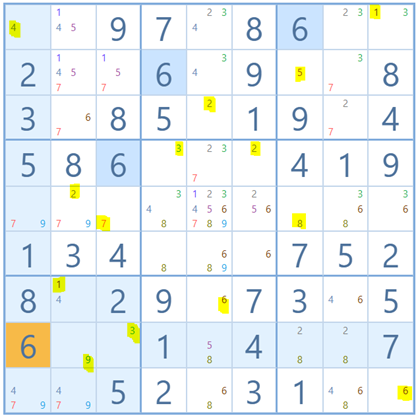 Sudoku has clear rules and limited options — a framework that forces creativity within structure.
Leaders face similar boundaries every day: budgets, regulations, deadlines, or stakeholder expectations. The puzzle reinforces the idea that effective decision-making isn’t about unlimited freedom; it’s about resourcefulness and precision within limits.
Now, certain cells have only one valid option left. These are safe, logical moves.
A common real-world parallel is reviewing data or configurations and realizing that — despite earlier ambiguity — the logic clearly points to one correct outcome.
In consulting, this shows up as confidently recommending a course of action when the analysis supports it, even if the decision initially feels uncomfortable or requires explaining the reasoning to others.
Momentum Through Insight
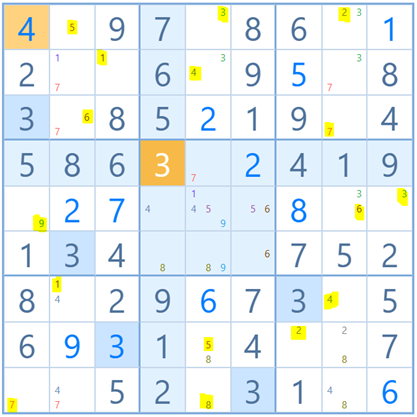 A single incorrect number can throw off an entire grid — yet you must always keep the full 9×9 structure in mind. Sudoku sharpens the ability to toggle between micro-level detail and macro-level perspective, a critical leadership skill.
The best managers and executives operate the same way: seeing both the immediate task and the larger system it fits into.
Placing a few correct numbers suddenly unlocks new parts of the board.
I experienced this while building queries for a shared template. Once I understood how to correctly link the necessary objects on the platform, progress accelerated rapidly and the work wrapped up within days.
In consulting, this shows up as uncovering a key technical or process insight that removes blockers and allows multiple tasks to move forward at once.
Adapting Without Losing Direction
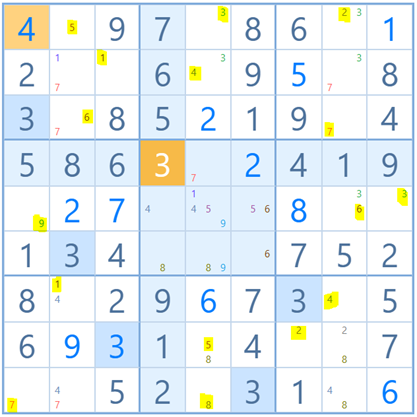 New information appears, and earlier assumptions must be revisited.
My current project required frequent adjustments as our understanding of system behavior and configuration constraints evolved. Direction changed, but momentum remained.
In consulting, this shows up as revising plans based on new information while keeping stakeholders aligned and continuing to move the project forward.
Precision When Stakes Are Highest
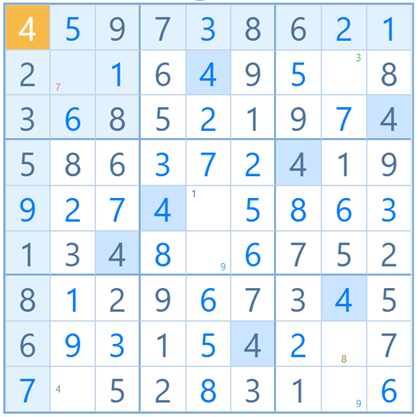 Only a few cells remain. Mistakes now would be costly.
This mirrors the final stages of sprints and deliverables, where my work is double-checked by teammates to ensure accuracy and quality while there’s still time to make adjustments.
In consulting, this shows up as careful validation, peer review, and risk reduction before deadlines or client-facing milestones.
Delivering With Confidence
 The puzzle is complete. Everything fits. No conflicts remain.
This is delivery — and accountability. The work stands on its own.
In consulting, this shows up as confidently standing behind a completed deliverable, knowing it was thoughtfully built, reviewed, and tested against real constraints.
Final Thoughts
I play Sudoku almost every night to wind down, and sometimes during the day when I need to step back from a problem. More often than not, it helps me reframe my thinking.
Sudoku compresses the consulting experience into a single exercise:
- Ambiguity at the start
- Structured analysis
- Focused prioritization
- Confident decision-making
- Adaptability
- Precision at delivery
All in one puzzle.
Conclusion: The Business Case for Sudoku
Sudoku is more than a mental diversion — it’s a low-stakes training ground for high-stakes decision-making. It develops patience, focus, and analytical clarity — attributes that form the foundation of sound business judgment.
Next time you open a Sudoku puzzle, think of it as leadership practice in disguise. You’re not just filling numbers; you’re strengthening the same cognitive muscles that help you plan strategically, solve creatively, and execute with precision.
What about you — have you found that certain hobbies, games, or routines sharpen your business mindset? Share your favorite “unexpected teacher” in the comments.

If your organization is ready to steer toward smarter IT solutions, we’re here to help you chart the course.
And if you’re looking to grow your own career journey, check out our open roles — your next adventure might be with us.
Austin Glover
Certified Google Data Analytics Specialization
Certified BillingPlatform Customer Essential
Certified BillingPlatform Partner Essential (L1)
RadixBay Associate Consultant